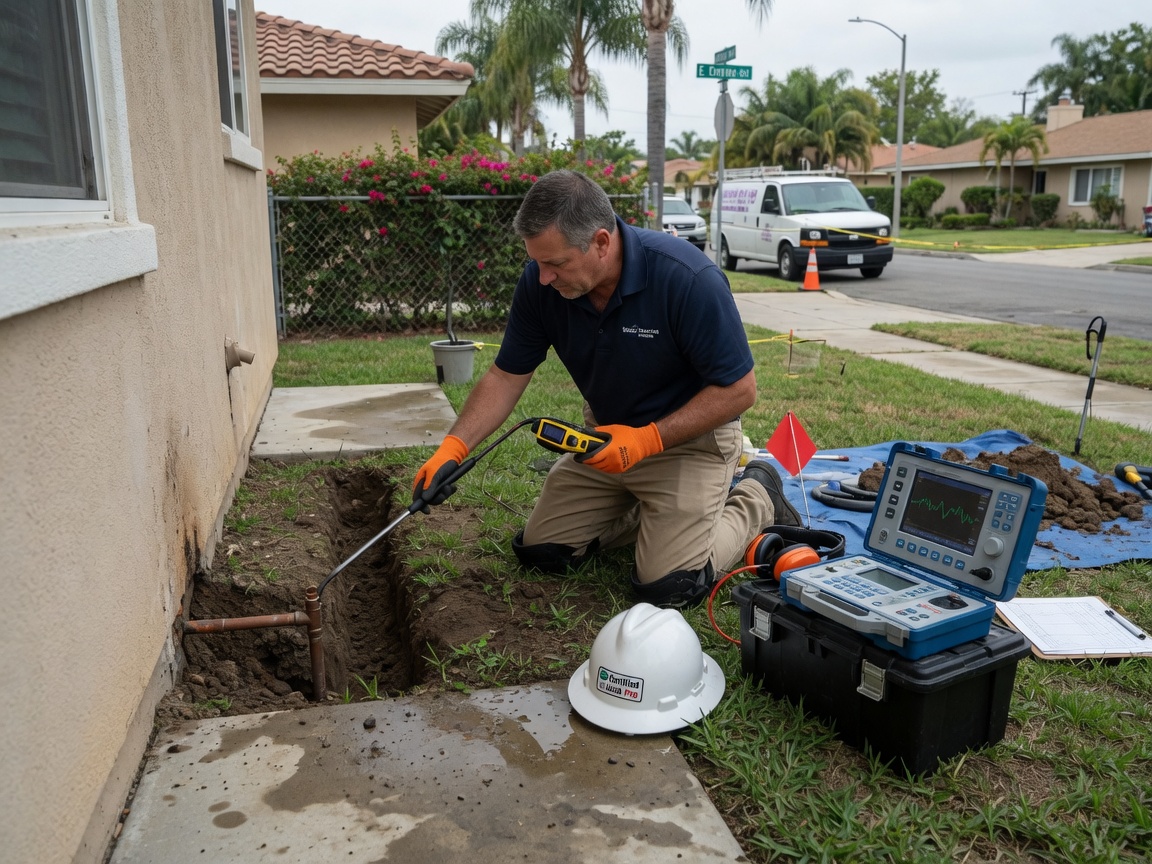
Bellflower’s post-war tract homes along Woodruff Avenue and Bellflower Boulevard often hide leaks behind stucco and under slabs. Our Lakewood-based crew arrives with acoustic listening gear and camera snakes sized for the narrow crawlspaces common in these 1950s and 1960s builds. Warm summer temperatures increase irrigation-line pressure, so we check both the house and the front-yard laterals that run close to the sidewalk.
Traffic on the 605 and busy Bellflower Boulevard can slow response, so we stage equipment at our Lakewood shop and head straight to Bellflower Park or the Civic Center area when calls come in. Flat lots here drain slowly, letting small leaks saturate soil and travel under neighboring driveways, which is why we map moisture before any digging starts.
We also cover the edges near Somerset Park and the high school, where older galvanized lines meet newer copper retrofits. Every job includes a written map of findings so homeowners can see exactly where the line runs under their concrete.
Around Bellflower
We regularly work near:
- 📍Bellflower Park
- 📍Bellflower High School
- 📍Bellflower Civic Center
- 📍Woodruff Avenue
- 📍Bellflower Boulevard
- 📍Somerset Park
Leak Detection in Bellflower — Local Notes
- •Bellflower’s 1950s-60s housing stock frequently uses galvanized steel that corrodes at joints, so we start with acoustic correlation before any excavation near front yards.
- •Flat terrain and older storm drains around Bellflower Park mean surface water can mask slab leaks during warm summer months, requiring moisture mapping on both sides of the foundation.
- •Narrow side yards and carports common along Woodruff Avenue limit equipment access, so we carry compact camera reels sized for 1-1/4 inch lines.
- •Proximity to Long Beach and Cerritos means many Bellflower homes share older water mains that run under sidewalks, so we always check the meter box first.